The estate sits halfway down the east coast, on the narrow plain between the sea and the first slopes of the mountains. That is what makes the area so easy to explore: one road runs along the coast, and smaller roads climb to the villages. Below are the outings we suggest to our guests, from the closest to the furthest. All distances are measured by road from the estate and rounded.
Taglio-Isolaccio, the village above the beach
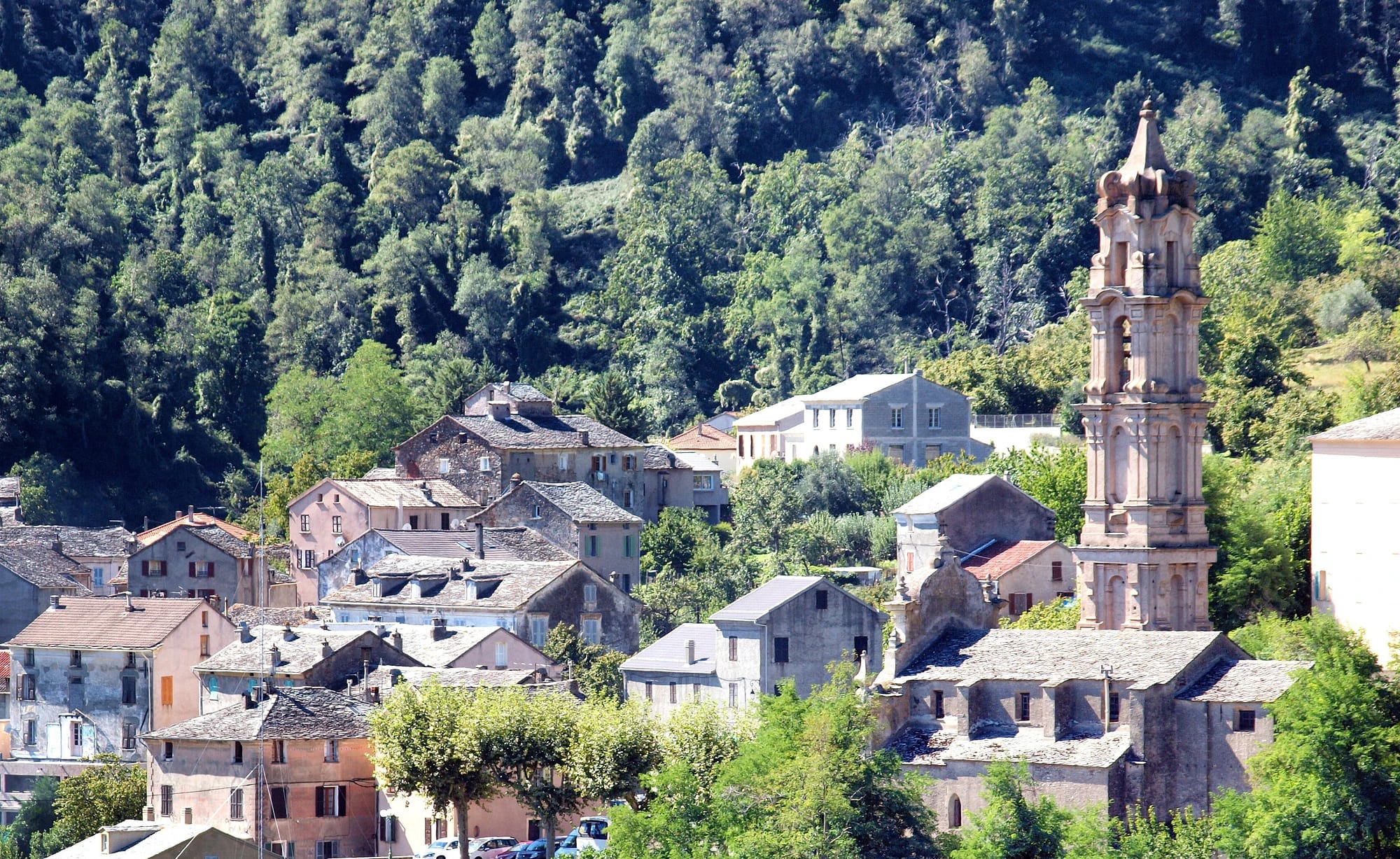
The estate’s own commune has a double name because it is made up of two hamlets perched opposite each other, Tagliu and Isulaccia, in the old pieve (parish district) of Tavagna. Across Corsica it is known as the home village of the Corsican group I Muvrini. Up in the hamlets, the 18th-century church of San Mamilianu holds two paintings, La Vierge allaitant (1682) and La Vierge du Rosaire (1760); its bell tower, over 38 metres high, is among the tallest in Corsica. The Baroque church of San Michele dates from the same century.
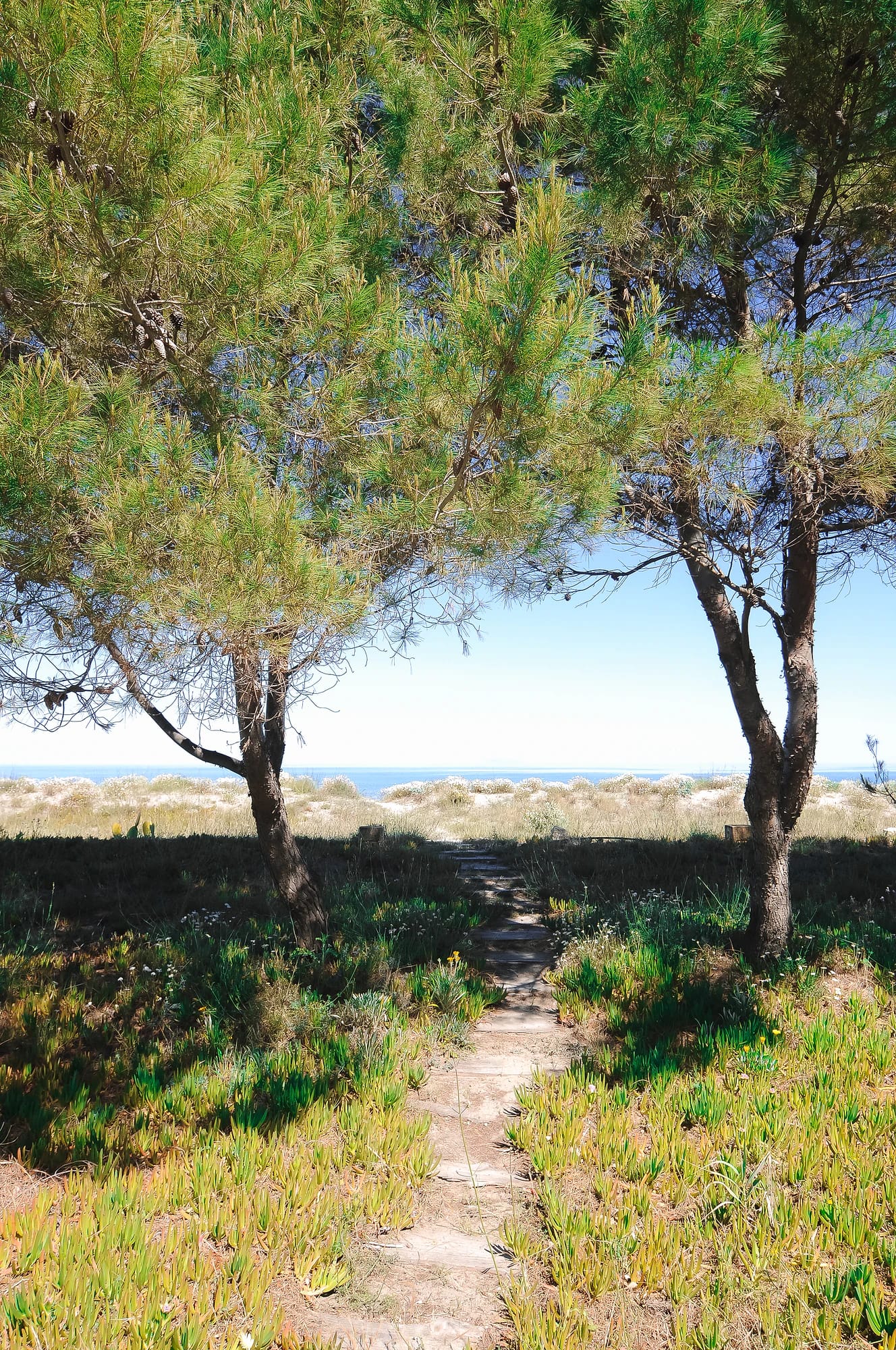
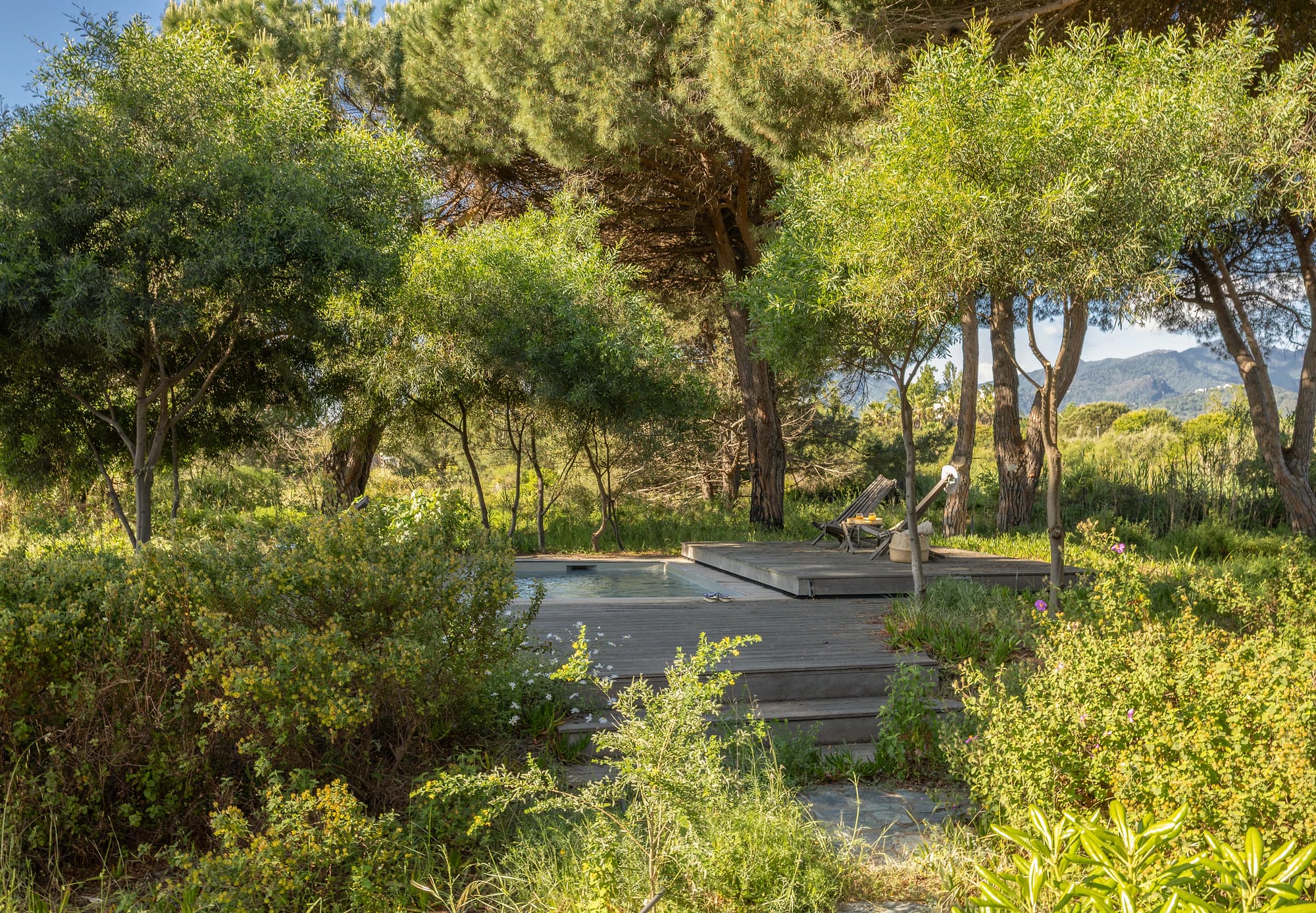
Down by the sea, the Fium’altu river meets the coast. Between the two lie olive groves, maquis and eucalyptus: all the green of the Costa Verde, the “green coast”.
Things to do on the Costa Verde itself
The Costa Verde brings together four old parish districts: Alisgiani, Campuloru, Moriani and Tavagna. On the coast, one sandy beach follows another; inland, the villages keep their churches, chapels and stone lanes. For the sea itself, swimming and the beaches nearby, see our guide to Corsica’s east coast beaches.
- Moriani-Plage, 9 km (about 12 minutes): the coast’s small resort, with shops and restaurants.
- Cervione, 19 km (about 25 minutes): a village set on a terrace above the plain, and the gateway to the Castagniccia. Its Anto Dumenicu Monti museum has 14 rooms of art and popular traditions. Cervione is also known for its hazelnuts.
- The Ucelluline waterfall, on the boundary between the villages of Santa-Maria-Poggio and San-Nicolao: a short walk for a shady late morning.
- The mountain rivers, which our guests mention again and again. Sven, who stayed in July 2022, wrote of “wild rockpools within 30 minutes in the mountains”.
The Castagniccia: a day among the chestnut trees
Behind the Costa Verde lies the Castagniccia, named after the chestnut tree, castagnu in Corsican. It has no coastline of its own: just ridges and wooded valleys beneath Monte San Petrone, which rises to 1,767 metres. The roads are narrow and winding, so it is best taken slowly, over a whole day.
La Porta, 24 km from the estate (about 40 minutes), makes a natural first stop: its Baroque church of San Ghjuvan Battista was built between 1644 and 1686. Further up, at Piedicroce, stand the ruins of the Orezza convent, founded in 1485, where Corsica’s declaration of independence of 1735 is still remembered. The Orezza valley also gives its name to a natural mineral water. At Morosaglia, the house where Pasquale Paoli was born is now a museum.
These places all lie on the Strada Paolina, a 13-stage heritage trail devoted to Paoli, signposted and open all year round. You can follow part of it in a day and still be back on the beach for the evening light.
Bastia and Cap Corse
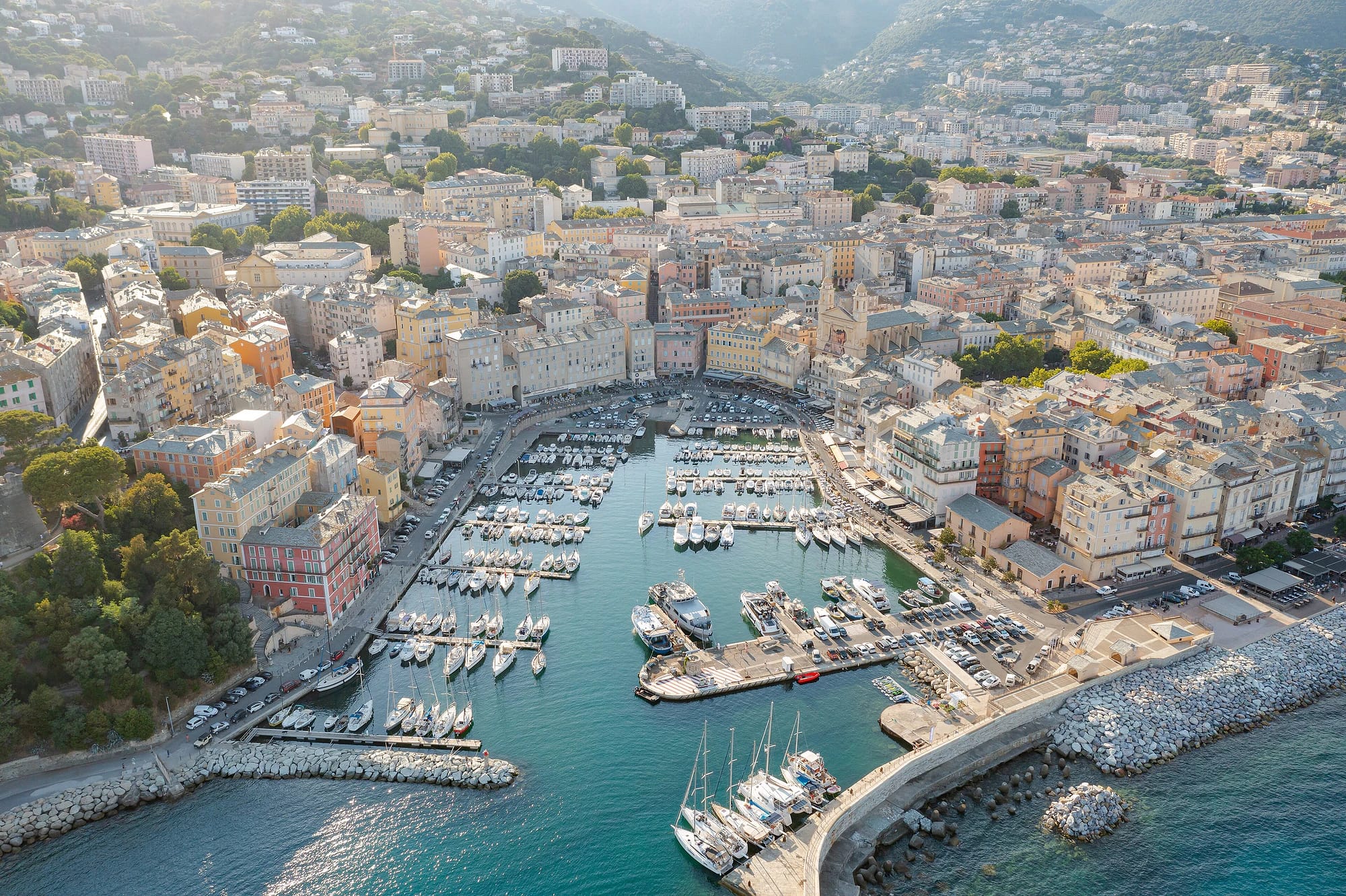
Bastia is 36 km away, around forty minutes by car. Go for the Old Port, the café terraces of Place Saint-Nicolas and the citadel. The Governors’ Palace, once the residence of the Genoese officials who ruled the island, now houses the Musée de Bastia, devoted to the city’s history; it reopened in 2010. Richard R., who stayed with us in August 2018, put it simply: “we could not expect a better location to discover northern Corsica.”
Beyond Bastia, Cap Corse makes a full-day loop: fishing villages, Genoese towers and, on the western side, the black pebble beach at Nonza, 62 km from the estate (about 70 minutes). Saint-Florent and its gulf are 46 km away (about 55 minutes).
Corte and the mountain valleys
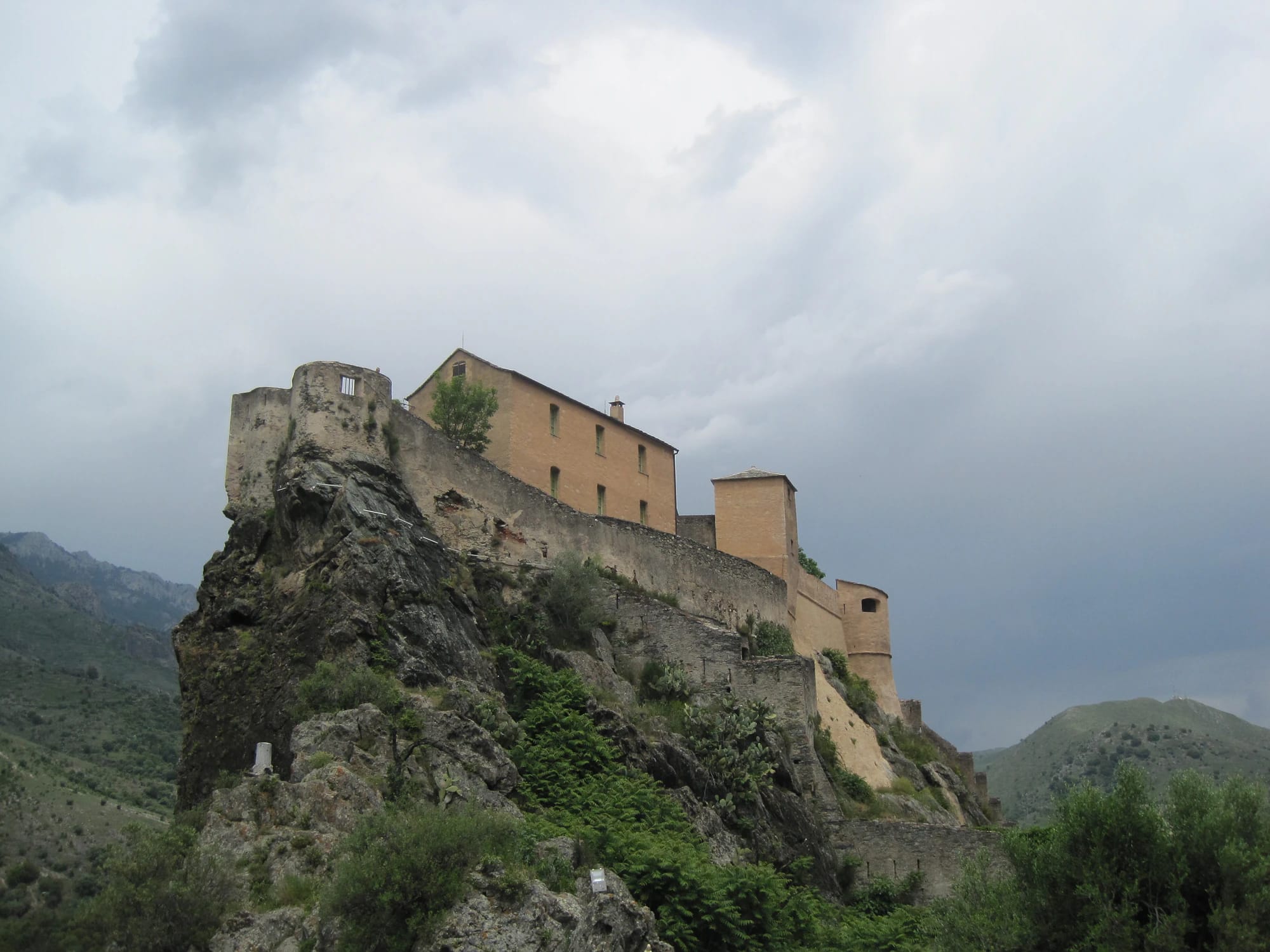
Corte is 61 km away, a little over an hour’s drive. Its citadel, built in 1420 by the Corsican lord Vincentello d’Istria, stands on a rock above the town. Pasquale Paoli made Corte the capital of independent Corsica from 1755 to 1769 and founded a university there in 1765. The citadel is visited together with the Musée de la Corse, which it houses.
The town guards the entrance to the Restonica and Tavignano valleys, with walking trails and pools of clear water: ideal on hot days, with good walking shoes.
Planning your days from the estate
Further south, the coast road leads to Aléria and its ancient site, 39 km away (about 45 minutes). Porto-Vecchio, 112 km away (just over two hours), and Bonifacio, 139 km away, are best kept for a long day with an early start.
- May, June, September and October are the best months for villages and walking: the air is mild and the roads are quieter.
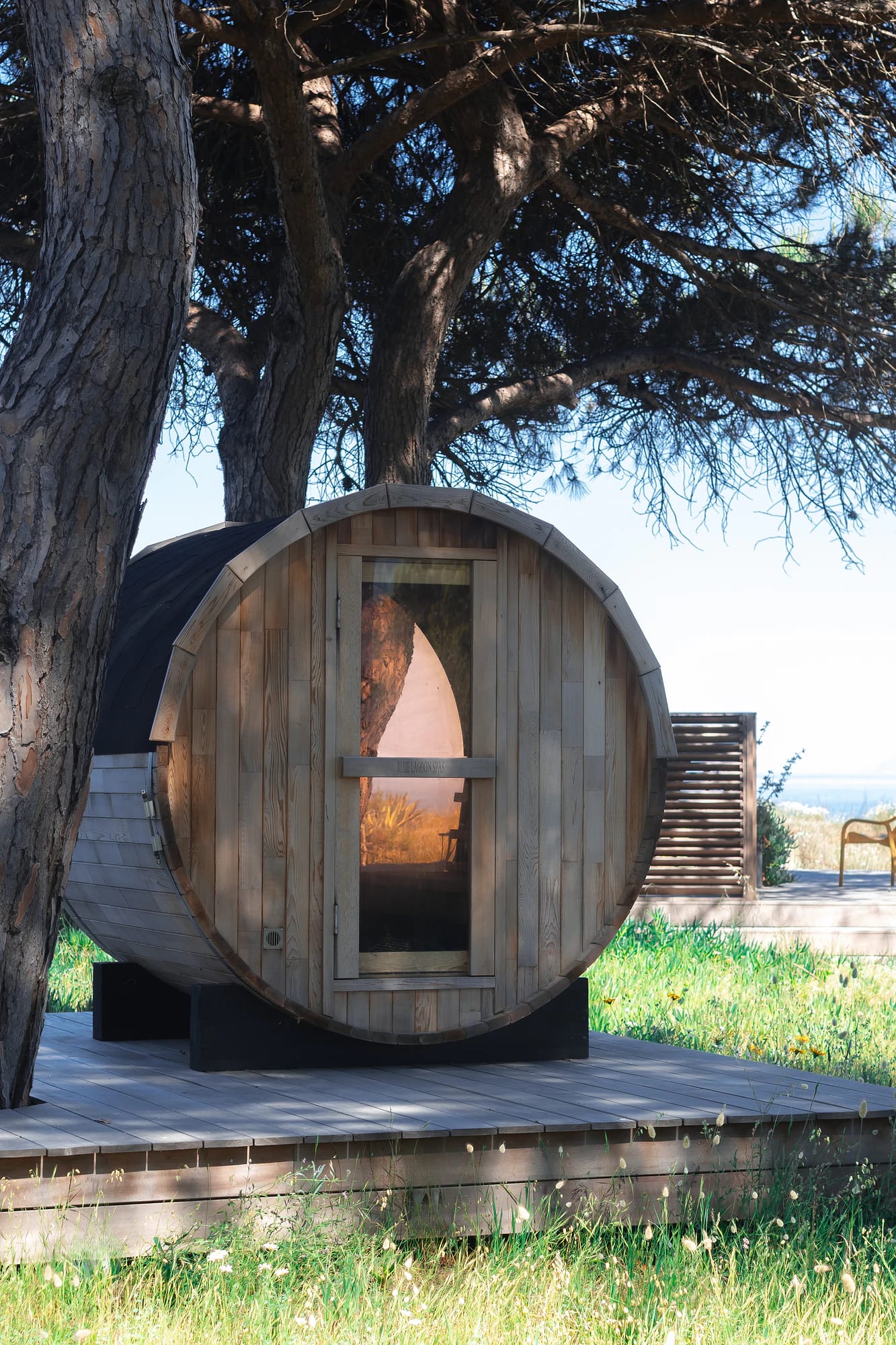
- In July and August, set off in the morning and come back for the end of the day, when the beach and the seaside sauna are at their best.
- For markets, producers, Corsican wines and charcuterie, we share our favourite addresses when you arrive.
The estate has four villas, from five-bedroom La Vignarella to A Lumaga among the eucalyptus trees. Compare them on our villas page, find travel details on the Costa Verde page, then send us your dates: we reply personally, with our suggestions for your days out.
Frequently asked questions
Where is the Costa Verde in Corsica?
On the east coast of northern Corsica, south of Bastia: 23 communes between the sea and the mountains, with 17 km of sandy beaches. Taglio-Isolaccio, home of La Vignarella, is one of them.
What can you do on the Costa Verde in one day?
Visit a hill village such as Cervione or Taglio-Isolaccio in the morning and spend the afternoon on the beach. For a longer day, drive up to La Porta in the Castagniccia (about 40 minutes), then on to the Orezza convent.
How far is Corte from the Costa Verde?
A little over an hour: Corte is 61 km from the estate by road. Allow a full day for the citadel, the Musée de la Corse and a walk in the Restonica valley.
When is the best time for day trips?
May, June, September and October: the air is mild, the mountain roads are quieter and the sea is still pleasant when you get back, especially in September.
Sources
- Costa Verde Tourist Office: the Costa Verde (23 communes, parish districts, 17 km of beaches) (opens in a new window)
- Costa Verde Tourist Office: Taglio-Isolaccio (hamlets, I Muvrini, churches, Fium’altu) (opens in a new window)
- Corsica Tourism Agency: La Castagniccia Mare e Monti (Cervione museum, hazelnuts, Ucelluline, Orezza water) (opens in a new window)
- Corsica Tourism Agency: A Strada Paolina (La Porta 1644-1686, Morosaglia, Orezza, Corte university 1765) (opens in a new window)
- Corsica Tourism Agency: a trip to Castagniccia (Orezza convent 1485, San Petrone 1,767 m) (opens in a new window)
- Corsica Tourism Agency: Musée de Bastia, Governors’ Palace (opens in a new window)
- Corsica Tourism Agency: Corte citadel (opens in a new window)
- Wikipedia (French): Castagniccia (cross-check: name, no coastline) (opens in a new window)